
- posted: Mar. 17, 2025
Skin cancer is the most common form of cancer in the United States, but the good news is that it is also one of the most treatable when detected early. Early detection plays a critical role in improving the success of skin cancer treatment, as it allows for timely intervention before the cancer has a chance to spread. At the Atlanta Center for Dermatologic Diseases, with locations in Alpharetta, Cumming, Roswell, and Sandy Springs, GA, our team of experienced dermatologists specializes in early skin cancer detection and advanced skin cancer treatment.
Why Early Detection Matters
Skin cancer develops when abnormal cells grow uncontrollably in the skin. The three most common types of skin cancer are basal cell carcinoma, squamous cell carcinoma, and melanoma. While basal and squamous cell carcinomas are typically less aggressive, melanoma can spread quickly and become life-threatening if not caught early. Regardless of the type, early detection significantly increases the likelihood of successful treatment and minimizes the need for more invasive procedures.
When skin cancer is detected in its earliest stages, it is often confined to the top layers of the skin. At this point, treatment is typically straightforward and highly effective. However, if left untreated, skin cancer can grow deeper into the skin and spread to other parts of the body, making treatment more complex and reducing the chances of a full recovery. This is why regular skin checks and prompt evaluation of suspicious spots are so important.
How to Spot the Signs of Skin Cancer
Being proactive about your skin health starts with knowing what to look for. Skin cancer can appear in many forms, including new growths, changes in existing moles, or sores that don’t heal. The ABCDE rule is a helpful guide for identifying potential melanomas: Asymmetry, Border irregularity, Color variation, Diameter larger than a pencil eraser, and Evolving size, shape, or color. If you notice any of these signs or other unusual changes in your skin, it’s essential to see a dermatologist as soon as possible.
How the Atlanta Center for Dermatologic Diseases Can Help
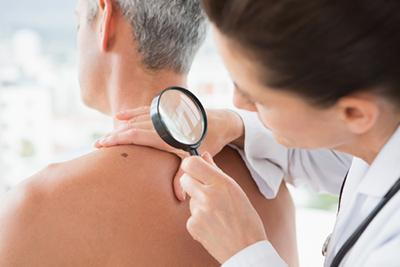
At the Atlanta Center for Dermatologic Diseases, we are committed to providing comprehensive care for skin cancer detection and treatment. Our dermatologists use advanced diagnostic tools and techniques to identify skin cancer in its earliest stages. During a skin exam, we thoroughly evaluate your skin for any suspicious lesions and, if necessary, perform a biopsy to confirm a diagnosis. If skin cancer is detected, we offer a range of effective treatment options tailored to your specific needs. These may include surgical excision, Mohs surgery for precise removal of cancerous tissue, or non-surgical treatments such as topical medications or cryotherapy.
Take Charge of Your Skin Health
Early detection is the key to successful skin cancer treatment. Regular skin checks and prompt attention to changes in your skin can make all the difference in protecting your health. At the Atlanta Center for Dermatologic Diseases, with locations in Alpharetta, Cumming, Roswell, and Sandy Springs, GA, our team is here to help. Call us today to schedule your appointment: Alpharetta (770) 664-5225, Cumming (770) 844-1902, Roswell (770) 751-1133, or Sandy Springs (404) 252-4333.
- posted: Mar. 17, 2025
Skin cancer is the most common form of cancer in the United States, but the good news is that it is also one of the most treatable when detected early. Early detection plays a critical role in improving the success of skin cancer treatment, as it allows for timely intervention before the cancer has a chance to spread. At the Atlanta Center for Dermatologic Diseases, with locations in Alpharetta, Cumming, Roswell, and Sandy Springs, GA, our team of experienced dermatologists specializes in early skin cancer detection and advanced skin cancer treatment.
Why Early Detection Matters
Skin cancer develops when abnormal cells grow uncontrollably in the skin. The three most common types of skin cancer are basal cell carcinoma, squamous cell carcinoma, and melanoma. While basal and squamous cell carcinomas are typically less aggressive, melanoma can spread quickly and become life-threatening if not caught early. Regardless of the type, early detection significantly increases the likelihood of successful treatment and minimizes the need for more invasive procedures.
When skin cancer is detected in its earliest stages, it is often confined to the top layers of the skin. At this point, treatment is typically straightforward and highly effective. However, if left untreated, skin cancer can grow deeper into the skin and spread to other parts of the body, making treatment more complex and reducing the chances of a full recovery. This is why regular skin checks and prompt evaluation of suspicious spots are so important.
How to Spot the Signs of Skin Cancer
Being proactive about your skin health starts with knowing what to look for. Skin cancer can appear in many forms, including new growths, changes in existing moles, or sores that don’t heal. The ABCDE rule is a helpful guide for identifying potential melanomas: Asymmetry, Border irregularity, Color variation, Diameter larger than a pencil eraser, and Evolving size, shape, or color. If you notice any of these signs or other unusual changes in your skin, it’s essential to see a dermatologist as soon as possible.
How the Atlanta Center for Dermatologic Diseases Can Help
At the Atlanta Center for Dermatologic Diseases, we are committed to providing comprehensive care for skin cancer detection and treatment. Our dermatologists use advanced diagnostic tools and techniques to identify skin cancer in its earliest stages. During a skin exam, we thoroughly evaluate your skin for any suspicious lesions and, if necessary, perform a biopsy to confirm a diagnosis. If skin cancer is detected, we offer a range of effective treatment options tailored to your specific needs. These may include surgical excision, Mohs surgery for precise removal of cancerous tissue, or non-surgical treatments such as topical medications or cryotherapy.
Take Charge of Your Skin Health
Early detection is the key to successful skin cancer treatment. Regular skin checks and prompt attention to changes in your skin can make all the difference in protecting your health. At the Atlanta Center for Dermatologic Diseases, with locations in Alpharetta, Cumming, Roswell, and Sandy Springs, GA, our team is here to help. Call us today to schedule your appointment: Alpharetta (770) 664-5225, Cumming (770) 844-1902, Roswell (770) 751-1133, or Sandy Springs (404) 252-4333.