
- posted: Dec. 20, 2025
Skin cancer is one of the most common conditions seen in dermatology, and early detection makes a significant difference in treatment outcomes. Many patients wonder how dermatologists determine whether a spot, mole, or lesion needs closer evaluation. At Atlanta Center for Dermatologic Diseases, with offices in Roswell, Alpharetta, Cumming, and Sandy Springs, GA, our board-certified dermatologists use a reliable method known as the ABCDEs of skin cancer to identify concerning changes and guide patients toward timely care.
Understanding the ABCDEs of Skin Cancer
Dermatologists use the ABCDE method to evaluate moles and pigmented spots, helping determine whether a mole appears typical or shows features that require closer attention. A stands for asymmetry, meaning one half of the mole does not match the other. B refers to border irregularity, such as edges that look uneven or smudged. C is for color variation, which includes two or more colors within the same mole. D represents diameter, especially lesions larger than 6 millimeters, though smaller spots can still raise concern. E stands for evolving, a key sign that includes any change in size, shape, color, or sensation.
Why Early Identification Matters
Early identification is essential because skin cancer often develops slowly, and many patients do not notice gradual changes until a spot becomes painful, bleeds, or grows quickly. Using the ABCDEs helps detect potential problems sooner, leading to more effective treatment. Basal cell carcinoma, squamous cell carcinoma, and melanoma may look different from one another, yet the ABCDE method remains a reliable tool that helps dermatologists distinguish harmless moles from those that may need further testing or biopsy.
What to Expect During a Skin Exam
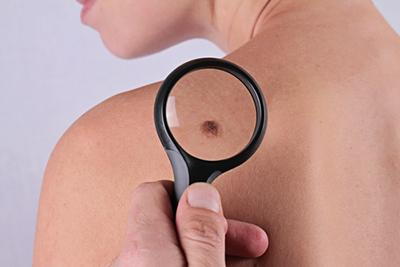
During a full skin examination, your dermatologist carefully evaluates all areas of the skin, including places that are hard to see on your own. They may use a dermatoscope, a magnifying tool that allows them to see deeper features within a lesion. If a mole or spot meets one or more of the ABCDE criteria, the dermatologist may recommend monitoring it over time or performing a biopsy to determine whether cancerous cells are present. The process is tailored to each patient, considering medical history, sun exposure, and any previous skin conditions.
Staying Proactive Between Visits
Regular skin exams with a dermatologist provide essential protection, but ongoing self-monitoring is equally important. Patients are encouraged to check their skin monthly and take note of any changes, whether new growths appear or existing moles evolve. Early reporting allows dermatologists to evaluate concerns promptly and create a treatment plan when necessary. Protecting your skin from sun damage with broad-spectrum sunscreen, protective clothing, and avoidance of peak sunlight hours further lowers risk.
Expert Skin Cancer Evaluation in the Atlanta Area
If you notice changes in a mole or want reassurance about a spot on your skin, a professional evaluation is the best first step. At Atlanta Center for Dermatologic Diseases, our board-certified dermatologists use the ABCDE method and advanced diagnostic tools to provide clear answers and personalized recommendations. To schedule an appointment, call our Roswell office at (770) 751-1133, Alpharetta at (770) 664-5225, Cumming at (770) 844-1902, or Sandy Springs at (404) 252-4333.
- posted: Dec. 20, 2025
Skin cancer is one of the most common conditions seen in dermatology, and early detection makes a significant difference in treatment outcomes. Many patients wonder how dermatologists determine whether a spot, mole, or lesion needs closer evaluation. At Atlanta Center for Dermatologic Diseases, with offices in Roswell, Alpharetta, Cumming, and Sandy Springs, GA, our board-certified dermatologists use a reliable method known as the ABCDEs of skin cancer to identify concerning changes and guide patients toward timely care.
Understanding the ABCDEs of Skin Cancer
Dermatologists use the ABCDE method to evaluate moles and pigmented spots, helping determine whether a mole appears typical or shows features that require closer attention. A stands for asymmetry, meaning one half of the mole does not match the other. B refers to border irregularity, such as edges that look uneven or smudged. C is for color variation, which includes two or more colors within the same mole. D represents diameter, especially lesions larger than 6 millimeters, though smaller spots can still raise concern. E stands for evolving, a key sign that includes any change in size, shape, color, or sensation.
Why Early Identification Matters
Early identification is essential because skin cancer often develops slowly, and many patients do not notice gradual changes until a spot becomes painful, bleeds, or grows quickly. Using the ABCDEs helps detect potential problems sooner, leading to more effective treatment. Basal cell carcinoma, squamous cell carcinoma, and melanoma may look different from one another, yet the ABCDE method remains a reliable tool that helps dermatologists distinguish harmless moles from those that may need further testing or biopsy.
What to Expect During a Skin Exam
During a full skin examination, your dermatologist carefully evaluates all areas of the skin, including places that are hard to see on your own. They may use a dermatoscope, a magnifying tool that allows them to see deeper features within a lesion. If a mole or spot meets one or more of the ABCDE criteria, the dermatologist may recommend monitoring it over time or performing a biopsy to determine whether cancerous cells are present. The process is tailored to each patient, considering medical history, sun exposure, and any previous skin conditions.
Staying Proactive Between Visits
Regular skin exams with a dermatologist provide essential protection, but ongoing self-monitoring is equally important. Patients are encouraged to check their skin monthly and take note of any changes, whether new growths appear or existing moles evolve. Early reporting allows dermatologists to evaluate concerns promptly and create a treatment plan when necessary. Protecting your skin from sun damage with broad-spectrum sunscreen, protective clothing, and avoidance of peak sunlight hours further lowers risk.
Expert Skin Cancer Evaluation in the Atlanta Area
If you notice changes in a mole or want reassurance about a spot on your skin, a professional evaluation is the best first step. At Atlanta Center for Dermatologic Diseases, our board-certified dermatologists use the ABCDE method and advanced diagnostic tools to provide clear answers and personalized recommendations. To schedule an appointment, call our Roswell office at (770) 751-1133, Alpharetta at (770) 664-5225, Cumming at (770) 844-1902, or Sandy Springs at (404) 252-4333.